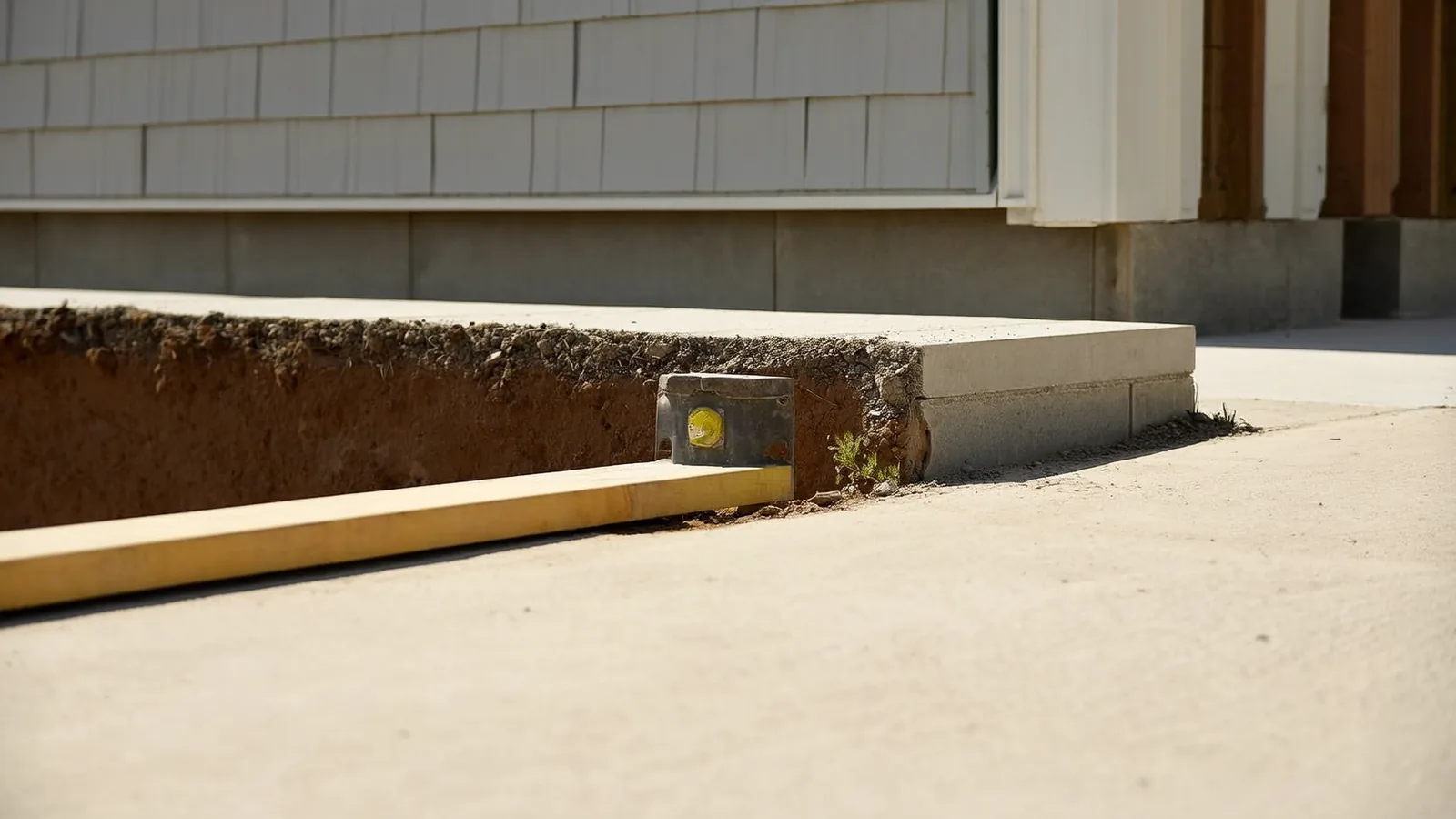
What is slab foundation repair and when is it the right choice?
Slab foundation repair covers the set of methods used to stabilize, lift, or underpin a concrete slab that has settled, cracked, or lost bearing support beneath it. In Knoxville and Knox County, two conditions drive most slab repair calls: the shrink-swell cycle of residual clay soils in valley positions, and the karst limestone geology that creates subsurface voids under portions of the county. When the concrete slab moves beyond cosmetic cracking, bowing floors, sticking doors, or visible gaps between the slab edge and brick veneer tell homeowners something structural has changed. The right repair method depends on why the slab moved, not just how far.
How slab repair works mechanically
Slab repair works by either restoring bearing support beneath the concrete (through piering, grout injection, or polyurethane foam) or by re-leveling the slab from below once that support is re-established. Hydraulic push piers or helical piers are driven through the slab or around its perimeter to competent bedrock or load-bearing strata below the active soil zone. Polyurethane foam expands into voids, compacts loose subsoil, and can raise the slab by fractions of an inch as it cures. Slabjacking pumps a cement-sand slurry into the void space to achieve a similar lift at lower cost. Each approach addresses a different soil failure mode.
The conditions slab repair is designed for
Slab repair is appropriate when the concrete itself is structurally intact but has been displaced by soil movement or void formation below. Differential settling in one corner of the slab, visible cracks at re-entrant corners (the inside corner of an L-shaped floor plan), or a floor that reads 1.5 to 2 inches out of level from one side to the other are textbook indications. In Knox County’s karst terrain, a slab dropping over a newly formed solution cavity may need void-fill and piering rather than simple leveling. Homes in flat-lot West Knoxville subdivisions built after 2000 are the most common slab candidates in this market, since the older housing stock across the county trends toward crawl-space construction.
When an alternative is the better call
Slab repair methods have limits. If the concrete has fractured across multiple panels and structural integrity is already compromised, full slab removal and replacement may cost less over a ten-year window than repeated patching. If the home sits on a crawl-space or pier-and-beam foundation, the repair methods used for pier-and-beam systems in Knoxville address a different structural anatomy. Mudjacking works well for moderately settled slabs where soil conditions are stable and verified void-free, but it adds weight on top of potentially compromised subsoil. In karst-risk zones, that added weight can aggravate rather than solve the problem.
Installation process
Step 1: Inspection and soil assessment (Day 1 morning, 2-4 hours)
A licensed contractor walks the interior and exterior perimeter, probes for soft spots, measures floor elevation changes with a digital level, and reviews any available soil or geological data for the parcel. In Knox County, contractors familiar with the Tennessee Geological Survey karst mapping will flag lots in documented void-risk zones before recommending a repair method. This step determines whether piering, foam injection, slabjacking, or a combination is appropriate.
Step 2: Access preparation (Day 1, 1-2 hours)
Pier installation typically requires access holes cut or cored through the slab at engineered spacing intervals, usually six to eight feet apart around the affected perimeter. Foam injection requires smaller drilled ports, typically five-eighths to one inch in diameter. Interior furniture and flooring must be cleared from the work zone. Landscaping or hardscape near the exterior perimeter may need temporary removal for exterior bracket placement.
Step 3: Pier or injection installation (Day 1-2, bulk of labor)
For piering, a hydraulic ram drives steel sections down through the access point until refusal at bedrock or the engineered load capacity is confirmed. For helical piers, a drive head rotates the pier into the ground like a large screw until it reaches the specified torque rating. For polyurethane foam, a technician injects two-part foam through each port; the material expands within seconds, filling voids and compacting loose subsoil. Slabjacking uses a pump to force a cement-sand slurry through similar ports under pressure. Equipment is compact enough to work inside a garage or living area with no excavation equipment on the lawn in most cases.
Step 4: Lift and load transfer (Day 2)
Once piers are seated or foam has cured, hydraulic jacks transfer the slab load onto the new pier caps. Technicians monitor floor elevation with a laser level during the lift phase. Raising a settled corner too quickly can crack drywall or shear plumbing connections, so experienced crews lift in small increments across multiple pier locations simultaneously. The target is structural stabilization, not cosmetic perfection.
Step 5: Patching and site restoration (Day 2-3)
Access holes are patched with hydraulic cement or concrete repair compound. Exterior soil displaced during pier driving is tamped and graded away from the foundation. Interior flooring reinstallation is the homeowner’s responsibility unless the contractor provides that service separately. Most Knoxville-area crews leave the site the same day the lift is complete, with a follow-up inspection scheduled at 30 days.
Slab foundation repair vs. mudjacking
The core trade-off between pier-based slab repair and mudjacking comes down to permanence versus cost. Mudjacking costs less upfront and can restore a moderately settled slab in a half-day, making it a practical choice for isolated sections of a driveway, a sunken garage floor, or a patio where no structural load is involved. The mudjacking method for Knoxville homes is well-documented and the material is widely available locally.
The problem with mudjacking for Knox County structural applications is weight and soil interaction. A cement-sand slurry is dense. Pumping it beneath a slab that sits over clay soils already saturated by Knox County’s 47.9 inches of annual rainfall (NWS Morristown, 1991-2020 Climate Normals) adds compressive load on material that is already failing. In karst areas, slurry may migrate into subsurface voids rather than supporting the slab, creating a false sense of repair while the void remains. Polyurethane foam weighs roughly 2 pounds per cubic foot compared to roughly 100 pounds per cubic foot for wet cement slurry, making it substantially easier on weak subsoil.
Pier-based underpinning bypasses the active soil zone entirely by bearing on bedrock or dense lower strata. That permanence justifies the higher per-pier cost for any application where the slab carries structural load: bearing walls, attached garage slabs connected to the home’s foundation system, or any slab over a documented karst risk area. Mudjacking remains the more cost-effective and faster solution for non-structural concrete surfaces where soil conditions have been evaluated and found stable.
Slab foundation repair cost in Knoxville, TN
According to Bob Vila’s foundation repair cost guide, piering and underpinning runs $1,000 to $3,000 per pier, and slabjacking (mudjacking) runs $500 to $1,300 per treated zone. The national average for foundation repair across all methods is $5,001, with a typical range of $2,176 to $7,833. This Old House corroborates that range, citing an average of $4,500 and a typical band of $2,000 to $7,500.
For a detailed breakdown of slab repair costs specific to Knoxville, local variables that shift the number include:
- Number of piers required. A corner settlement might need four to six piers. A long-side perimeter issue could require twelve or more. More piers mean more access holes, more steel, and more labor hours.
- Depth to competent bearing. Knox County’s karst limestone bedrock can be shallow on ridge lots or deep in valley positions. Deeper drives require more pier sections and longer installation time.
- Site access. Interior pier work inside a finished living space requires moving furniture, protecting flooring, and patching concrete. That labor adds to the base pier cost.
- Void complexity. Homes over solution cavities may need void-fill before or concurrent with pier installation, adding polyurethane foam material costs.
Get a written estimate for your Knoxville property before committing to any scope. Costs vary enough between contractors and site conditions that phone quotes without a site visit are unreliable.
Warranty and transferability
A standard warranty for pier-based slab underpinning from an established contractor covers materials and workmanship for 25 years and is transferable to subsequent owners at no charge beyond a nominal administrative fee. That transferability matters in a market where median home values in the Knoxville metro sit in the $290,000 to $325,000 range: documented structural repairs with a transferable warranty convert what could be a deal-killer on a disclosure form into a selling point.
Before signing any repair contract, ask four specific questions. First, does the warranty cover both materials and labor, or only one? Second, is the warranty backed by the contractor directly or through a third-party administrator? Third, what voids the warranty, and does normal soil movement count as an exclusion? Fourth, what is the documented process for transferring coverage at resale?
Polyurethane foam injection warranties vary more widely. Some contractors warrant foam injection for ten years; others offer lifetime coverage on the material but not on re-leveling if the slab moves again from a new cause. Read the specific language rather than relying on a verbal summary.
Permits and engineering for slab repair in Knoxville
Structural slab repair, including underpinning, piering, and any work that modifies load-bearing conditions, falls under Tennessee’s statewide building construction safety standards at TCA 68-120-101 and the adopted codes under Rule 0780-2-2, as published by the Tennessee Department of Commerce and Insurance Codes Enforcement. Tennessee’s adoption of the International Residential Code means structural repair work on slab foundations requires a building permit in most jurisdictions.
For properties inside city limits, permits are issued through City of Knoxville Development Services, located at the City-County Building, 400 Main Street, Knoxville. For properties in unincorporated Knox County, permits go through Knox County Building Inspection. The contractor typically pulls the permit as part of their scope, but the homeowner is ultimately responsible for confirming that permitted work was inspected and closed. An uninspected permit that stays open on the record can complicate a future home sale.
Engineering documentation is required for most structural underpinning projects. A licensed structural engineer stamps the pier layout plan, specifies the pier type and capacity, and may require a post-installation load test before the permit can be closed. In karst-risk areas, some inspectors or mortgage lenders request a geotechnical report confirming bedrock depth and the absence of active void migration before approving a repair scope. Plan for that possibility when scheduling the project, as geotechnical reports add two to three weeks to the pre-construction timeline.
For Knoxville homeowners starting to assess their foundation concerns, a review of the foundation problems common to Knox County homes and an overview of foundation repair services across the Knoxville service area are useful context before requesting a contractor visit.