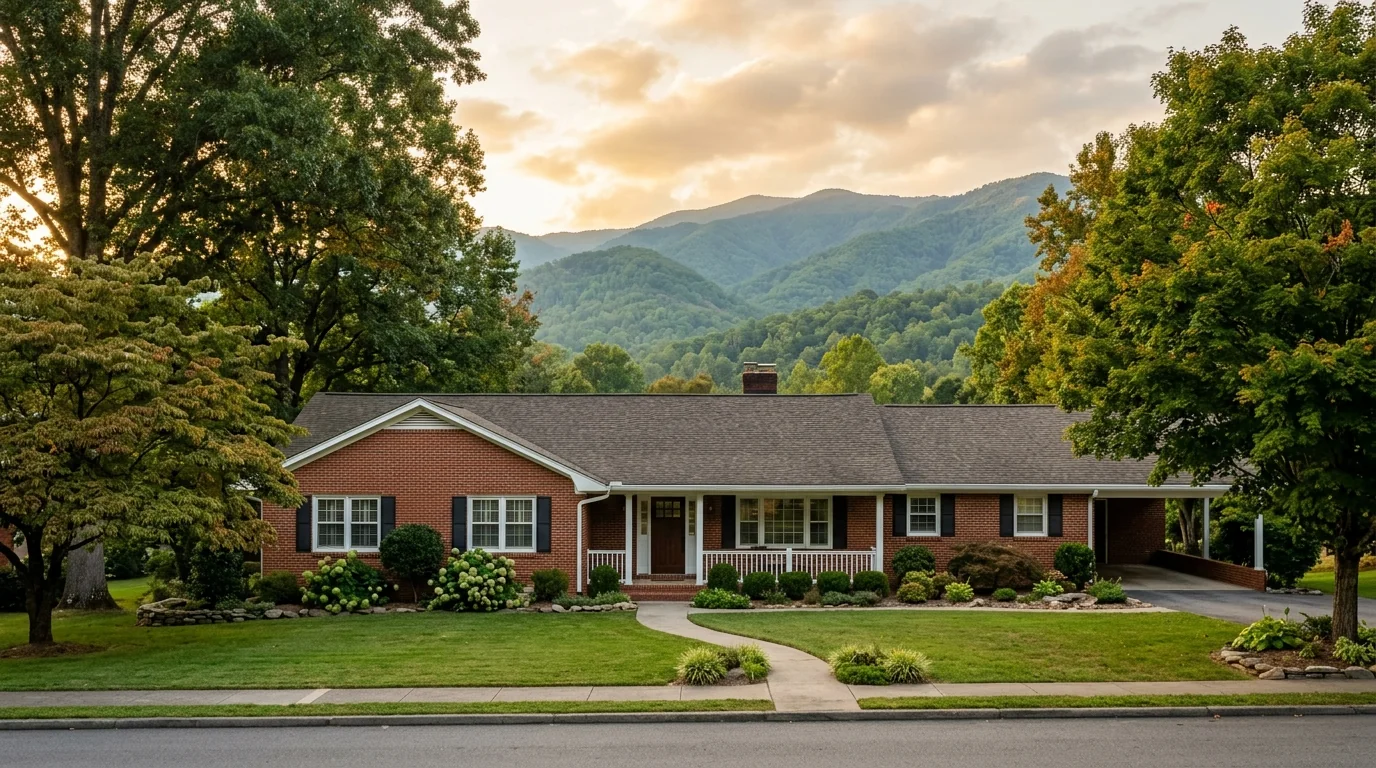
Service Area · Blount County
Foundation repair in Alcoa, TN
Alcoa sits in Blount County just south of Knoxville, where silty clay loam soils expand and contract with seasonal rainfall, stressing foundations throughout the year. The city is part of the Knoxville metro and shares the Great Appalachian Valley geology that drives settlement, cracking, and wall movement. Homes of varying ages across Alcoa neighborhoods face soil-moisture cycles that compound over decades.
Why Alcoa Foundation Repair Is Different
Alcoa sits inside the Knoxville Metropolitan Statistical Area in Blount County, where the Great Appalachian Valley transitions toward the foothills of the Great Smoky Mountains. That geography shapes everything about how foundations behave here. The soils are not uniform sand or stable loam. They are clay-rich, slope-prone, and sensitive to the wet-dry swings that Tennessee’s seasonal rainfall pattern delivers every year. Understanding those soils, the regional climate, and the era when most local homes were built is the starting point for any honest conversation about foundation repair in this city.
Soil and Geology in Alcoa
USDA SSURGO data for Alcoa parcels identifies three dominant soil series: Sequoia silty clay loam in its eroded sloping phase, Dewey silty clay loam on 6-to-15 percent slopes in an eroded condition, and the Dewey-Collegedale complex on similar slopes in a severely eroded state. All three share two traits that matter most to foundation performance. First, they contain enough clay to expand meaningfully when they absorb water and to shrink and crack when they dry out. Second, they appear on sloped ground, which means lateral drainage and erosion have already stripped away some of the protective topsoil layer, leaving clay-dominant material closer to the surface where footings bear.
Wikipedia’s entry on expansive clay confirms that soils prone to large volume changes tied to water content can generate significant stress on structural foundations. When footings bear on Alcoa’s Dewey or Sequoia series soils through multiple wet and dry cycles, the cumulative movement adds up. Gaps open at wall-to-footing connections, floor slabs crack, and in pier-and-beam homes the wood framing begins to rack. None of those symptoms are cosmetic. They are the physical record of soil movement recorded in the structure above.
The slope factor adds a second stress mechanism. On lots with 6-to-15 percent grades, rainwater runs downhill and collects on the low side of a foundation rather than dispersing evenly. That uneven saturation creates differential settlement, where one corner or wall moves more than the opposite side. The result is diagonal cracking at door and window corners, doors that bind in their frames, and in more advanced cases, visible separation between a wall and the ceiling or floor plane.
Climate Patterns That Drive Alcoa Foundation Movement
Alcoa shares the Knoxville metro climate, which Wikipedia’s Knoxville, Tennessee article describes as receiving just under 52 inches of annual precipitation with a January average of 38.2 degrees Fahrenheit and a July average of 78.4 degrees. That combination matters because it produces exactly the wet-dry cycle that silty clay loam soils respond to most severely. Spring rains saturate the ground and cause clay to swell. Summer heat dries the soil and causes it to shrink and crack. By autumn the cycle has run its course, and the foundation has absorbed another season of push-and-pull from the ground beneath it.
The winter freeze-thaw cycle adds a third stressor. When soil moisture freezes in January and February, it expands. When temperatures climb back above freezing in late winter, that expansion reverses. Footings that are not deep enough to sit below the frost line can heave slightly with each freeze cycle. Over years, that heaving and resettling contributes to the crack patterns many Alcoa homeowners notice in early spring after the ground thaws.
Housing Era and Construction Patterns in Alcoa
Alcoa grew substantially during the twentieth century around the aluminum manufacturing operations that gave the city its identity. That industrial heritage means the city has housing stock from multiple distinct eras, each with its own foundation approach and potential failure mode. Postwar homes from the late 1940s through the 1960s often used pier-and-beam construction, where wood framing sits on masonry piers above a crawl space. Those piers can settle individually as soil moisture varies, producing uneven floors and sticking doors. Homes built from the 1970s forward are more likely to use slab-on-grade construction, which distributes load across the full footprint but can crack when the clay beneath it swells or shrinks unevenly.
Newer subdivisions that have developed in Alcoa since the 1990s and 2000s generally use slab foundations engineered to modern International Residential Code standards. Even so, modern slabs are not immune to the Sequoia and Dewey soil series conditions documented by USDA. If site drainage was not maintained after construction, or if tree roots have altered soil moisture near the perimeter, slab movement can still occur. For a full picture of common foundation problems affecting Tennessee homes, the soil type and drainage history of the specific lot matter as much as the age of the home.
Alcoa Neighborhoods and Foundation Patterns
Different parts of Alcoa reflect different soil conditions, lot grades, and housing eras. The following characterizations are based on the USDA soil series distribution and the city’s development history.
- Springbrook: Established residential area with a mix of postwar and mid-century homes. Pier-and-beam construction is common, and crawl-space moisture issues frequently accompany footing settlement on clay-dominant lots.
- Hunter Hills: Sloped terrain in this section puts homes on grades where the Dewey silty clay loam eroded series is most active. Differential settlement and diagonal cracking are the typical presenting symptoms.
- West Alcoa: Older housing stock closer to the original industrial center. Masonry block foundations from the 1950s and 1960s face mortar deterioration alongside clay-driven lateral pressure.
- Fairmount: A mix of ranch-style slab homes and older pier-and-beam structures. Slab cracking near the perimeter beam is the most common issue reported in similar soil zones.
- Calderwood: Sits in lower terrain where seasonal drainage from surrounding slopes can pool. Saturated soil near foundations accelerates both settlement and crawl-space moisture intrusion.
- South Alcoa: Newer development with modern slab construction, but lots that were graded aggressively during subdivision can redirect drainage toward foundation perimeters years after construction.
- Topside Road area: Transitional zone between Alcoa and Maryville with larger lots and varied foundation types. Eroded slope soils on steeper parcels are a recurring factor in settlement complaints.
- McGhee Tyson area: Proximity to the airport corridor means some properties here sit on fill soils placed during airport and industrial expansion. Fill that was not compacted to engineering specifications settles over time regardless of foundation type.
- Alcoa Highway corridor: Commercial-to-residential transition zone with scattered older homes. Clay subsoils here are among the least modified in the city, and original footings bear directly on the native Sequoia series.
How to Find an Alcoa Foundation Repair Contractor
The Knoxville metro has no shortage of companies advertising foundation services, but not every contractor has meaningful experience with Blount County’s specific soil conditions. Four criteria separate contractors worth hiring from those worth passing on.
Warranty terms that transfer. A repair warranty that disappears when you sell the home protects the contractor more than it protects you. Ask specifically whether the warranty covers both materials and workmanship, how many years it runs, and whether it is transferable to a future buyer in writing. A transferable warranty turns a documented repair into a marketable feature if you sell.
An engineering letter available on request. For any job involving piering, underpinning, or wall stabilization, a legitimate contractor should be able to provide a post-repair engineering letter confirming that work met design specifications. This document matters to mortgage lenders, future buyers, and your own peace of mind. Contractors who cannot or will not produce one are worth questioning.
Specific local experience in Blount County soils. Ask how many jobs the company has completed in Alcoa specifically, not just in the broader Knoxville area. The Dewey and Sequoia soil series that USDA SSURGO identifies for Alcoa have distinct slope and erosion characteristics that differ from flatter Knoxville lots. A contractor who can speak to those specifics has done the work here. One who cannot is using regional experience as a substitute for local knowledge.
Diagnostic discipline before proposing a solution. A contractor who names a repair method before completing a full exterior and interior inspection is selling a product, not solving a problem. The inspection should come first, the diagnosis second, and the proposal third. That sequence protects you from buying a repair that addresses the symptom rather than the cause. Start with a free foundation inspection in Alcoa to establish a baseline before talking to any contractor about solutions.
What to Expect from an Alcoa Foundation Inspection
A thorough inspection in Alcoa covers four areas.
Exterior walk-around. The inspector looks for cracks in brick veneer or poured concrete, gaps between the foundation wall and the sill plate, displaced grading that directs water toward the house, and evidence of prior repair attempts. On sloped Alcoa lots, the low side of the foundation typically shows more distress than the high side, and a careful inspector will document both.
Interior walk-through. Inside, the focus shifts to crack patterns in drywall, floors that slope or feel soft underfoot, doors and windows that bind or no longer plumb with their frames, and gaps at crown molding or baseboard. These symptoms map back to specific locations on the foundation, helping the inspector triangulate where movement originated.
Crawl-space or slab inspection. For pier-and-beam homes in Springbrook, Hunter Hills, and West Alcoa, the crawl space tells the most direct story. Standing moisture, deteriorated piers, sagging beams, and wood rot are all visible indicators of how the foundation is performing. For slab homes, the inspection focuses on the perimeter beam and any interior cracks that suggest where the slab has deflected.
Drainage and slope assessment. Given the eroded slope phases of Alcoa’s dominant soil series, no inspection is complete without documenting how water moves across and away from the property. Downspout discharge that terminates against the foundation, negative grades that pool water at the perimeter, and missing or damaged gutters are contributing causes that must be corrected alongside any structural repair to prevent recurrence.
Repair Methods Used Most Often in Alcoa Homes
The soil and foundation types in Alcoa translate to a predictable order of frequency for repair methods. For detailed cost information by method, see the foundation repair cost guide.
- Steel push piers and helical piers. The most common intervention for settlement on clay-bearing soils. Piers are driven or screwed through the active clay layer to competent bearing strata below. According to Bob Vila’s foundation repair cost guide, piering and underpinning runs $1,000 to $3,000 per pier. See more on piering methods used in Knoxville area homes.
- Crawl-space repair and pier replacement. For pier-and-beam homes, replacing deteriorated masonry piers with concrete or steel equivalents and sistering damaged beams restores floor levelness. This is the primary intervention for postwar Alcoa housing stock.
- Wall anchor and carbon fiber reinforcement. Where lateral soil pressure has bowed or cracked basement or block walls, anchors tied to stable soil and carbon fiber straps bonded to the wall face stop further movement. Bob Vila lists stabilization and reinforcement in the $4,000 to $12,000 range.
- Slab crack injection and mudjacking. For slabs that have not settled severely but show cracks or voids beneath the surface, epoxy or polyurethane injection seals cracks and mudjacking or polyurethane foam fills subsurface voids. Mudjacking costs $500 to $1,300 per Bob Vila.
- Crawl-space encapsulation and drainage. Not strictly a structural repair, but encapsulation and interior drainage systems reduce the soil moisture fluctuation that drives clay movement in the first place. Addressing the moisture source extends the service life of any structural repair performed above it.
Browse the full list of foundation repair methods available for Knoxville metro homes to compare options before your inspection appointment.
Alcoa Building Permits for Foundation Repair
Foundation repair in Alcoa falls under Blount County jurisdiction for permitting. Most structural repairs, including pier installation, wall anchoring, and beam replacement, require a building permit before work begins. Alcoa is an incorporated city inside Blount County, and the county’s Building and Codes department processes permits for work within city limits. Confirm the current permit application process and fee schedule directly with that office before any contractor breaks ground.
Tennessee sets the framework for those local requirements through state statute. Tennessee’s Department of Commerce and Insurance, Codes Enforcement administers TCA 68-120-101, which establishes statewide building construction safety standards, and Rule 0780-2-2 governs the adopted codes and standards. Tennessee has adopted the International Residential Code as its base standard, which means the IRC’s structural requirements for foundation repair apply to permitted work in Alcoa.
Homeowners should be cautious about any contractor who proposes to skip the permit process to save time or money. Unpermitted structural work can complicate a future home sale, void a warranty, and leave the homeowner liable if the repair is later found to be deficient. A legitimate contractor will include permit acquisition as a standard part of their project process, not an optional add-on.
Other Tennessee Cities We Serve
Foundation conditions across the Knoxville metro vary by neighborhood, soil series, and housing era. If you are researching repair options for a property outside Alcoa, the following pages cover nearby markets in detail.
- Foundation repair services in Knoxville, TN covers the metro’s core market, including the Great Appalachian Valley geology and the city’s older housing stock.
- Foundation repair in Seymour, TN addresses the rural Blount County corridor south of Alcoa where sloped lots and clay soils produce similar settlement patterns.
- Foundation repair in Rockford, TN covers the small community along the Little River where creek-adjacent properties face seasonal saturation and differential settlement.
Alcoa foundation repair FAQs
Why is foundation damage so common in Alcoa homes?
How long does foundation repair last in Alcoa TN?
Does foundation repair in Alcoa require a building permit?
What should Alcoa homeowners look for in a local contractor?
Which Alcoa neighborhoods see the most foundation problems?
Does a free inspection mean a contractor will diagnose everything?
What type of foundation is most common in Alcoa homes?
Foundation trouble in Alcoa?
A free on-site inspection with an elevation survey and a written diagnosis. No obligation.