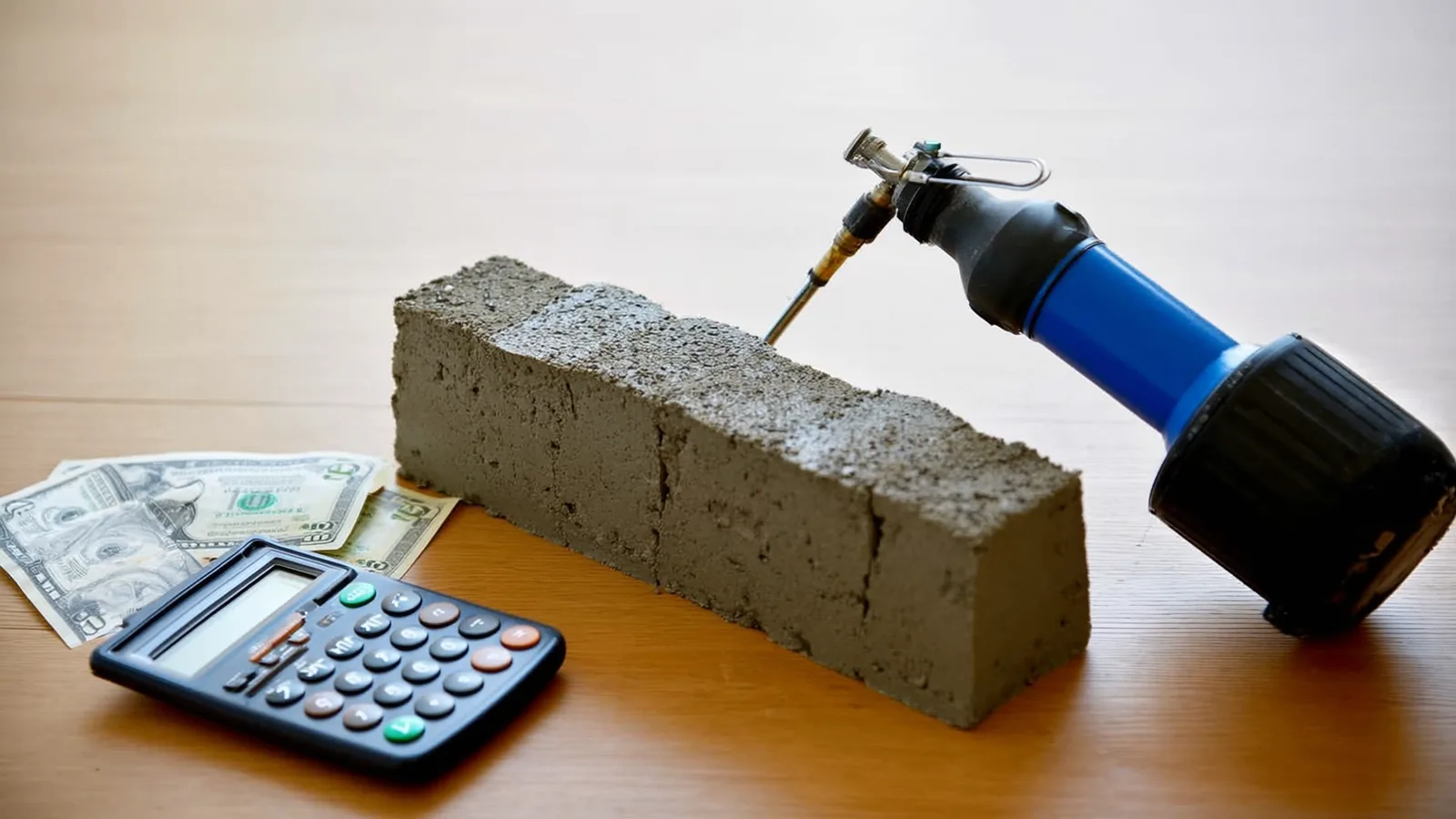
Mudjacking Cost in Knoxville TN
Mudjacking in Knoxville typically costs $500 to $1,300 per job based on the size and number of slabs being lifted. Knox County karst limestone geology and shrink-swell clay soils affect both the suitability of mudjacking and its long-term results. This page breaks down every cost variable so you can compare quotes accurately.
Updated Jan 30, 2025 · 8 min read
What Mudjacking Actually Costs in Knoxville, TN
Mudjacking costs $500 to $1,300 for most residential jobs, according to Bob Vila’s May 2024 foundation repair cost guide. That range covers the majority of flatwork projects: sunken driveways, sidewalk panels, patio slabs, and garage floors. Broader foundation repair across all methods averages $5,001 nationally, with a typical range of $2,176 to $7,833.
Knoxville pricing lands within that national window. Labor rates in the Knoxville metro track slightly below the national average, reflecting a median household income of roughly $54,000 within the city and $72,000 across the broader metro. Material costs for the cement-soil slurry itself are commodity-driven and do not vary dramatically by region. What does vary is job complexity, and Knox County’s terrain introduces several complexity factors that do not apply in flatter Southeastern markets.
Knox County sits in the Great Appalachian Valley, with elevations ranging from about 800 feet at the riverfront to over 1,000 feet on western hilltops (Wikipedia: Knoxville, Tennessee). That elevation variation means many residential lots slope meaningfully, which affects how mudjacking slurry migrates under a slab and how many injection points a crew needs to achieve uniform lift. Steeply graded driveways and hillside patios routinely require more drill holes than flat-lot work, pushing costs closer to the $1,300 ceiling.
Knox County’s karst limestone bedrock adds a second local variable. Documented sinkhole and solution-cavity activity throughout the county means the voids beneath some sunken slabs are not simply compacted or eroded clay. They are genuine subsurface cavities. Mudjacking fills the void with a heavy slurry that adds load to the soil column, which works well when the underlying cause is gradual clay shrinkage. When the cause is an active karst cavity, that added weight can accelerate further movement. A qualified inspector should distinguish between these two scenarios before any mudjacking contract is signed.
What Drives the Cost
Slab area and drill-hole count. Contractors price mudjacking primarily by the number of injection holes and the volume of slurry pumped. A standard residential sidewalk section may need four to six holes. A two-car garage floor can require twelve or more. Larger slabs cost more, with no flat per-square-foot rate that applies universally.
Soil type and void depth. Shallow voids created by clay shrinkage fill quickly with less material. Deeper voids or larger cavities require significantly more slurry volume, which increases both material and time costs. Knox County’s combination of shrink-swell residual clay in valley positions and potential karst voids on limestone-underlain lots means void geometry here is less predictable than in pure clay markets.
Access conditions. Mudjacking equipment is truck-mounted. Tight side yards, steep grades, landscaping, and fencing can force crews to hand-drag hoses or reposition equipment multiple times. That additional labor adds to the total. Many West Knox post-2000 subdivisions have relatively flat, open lots. Older pre-2000 homes in neighborhoods with hilly terrain or mature plantings can add $100 to $300 in access-related labor.
Number of separate slab sections. Each discrete slab section, a driveway apron, a detached patio, a basement stoop, is effectively a separate setup. Contractors may charge a minimum per mobilization, so consolidating multiple small jobs in a single visit saves money.
Warranty scope. Some contractors offer a one-year or two-year warranty against re-settlement. Others provide no warranty. The difference in contract value should be factored into any price comparison, not just the headline number.
Permits and inspections. Most mudjacking jobs on non-structural residential flatwork do not trigger a permit requirement under Tennessee’s building safety statutes, governed by TCA 68-120-101. If the repair involves a structural footing or load-bearing foundation element, Knox County One-Stop may require a permit. Permit fees in Knox County for minor structural work typically run $75 to $200, though costs vary by scope.
By Foundation Type and Problem Severity
Sunken Flatwork (Driveways, Patios, Sidewalks)
This is the core application for mudjacking and the scenario that falls squarely within the $500 to $1,300 range. A single sunken driveway panel or a two-slab patio section is the most straightforward job a mudjacking crew handles. Knoxville homeowners with West Knox flat-lot homes built after 2000 on compacted fill are the most likely candidates for straightforward mudjacking at the lower end of the range.
Crawl-Space Slab Floors and Interior Concrete
Knox County has high crawl-space prevalence. The Valley-and-Ridge terrain favored crawl-space and pier-and-beam construction in pre-2000 homes. Interior concrete in crawl-space homes is uncommon, but some older Knoxville homes have poured concrete floors in basements or lower levels. Mudjacking interior slabs requires equipment access through doors or windows and adds setup time. Costs for interior work often run $200 to $400 higher than equivalent exterior jobs.
Garage Floors
Garage floor leveling is one of the more common mudjacking calls in Knoxville. A standard two-car garage floor that has settled one to two inches typically needs eight to fourteen drill holes. At mid-range pricing, expect $700 to $1,100 for most Knox County garage floor jobs, depending on lot grade and void depth.
Structural Foundation Slabs
Mudjacking is not a primary structural repair method for slab-on-grade foundations with significant differential settlement. If a Knoxville home’s slab has settled several inches, shows wide step cracking at corners, or sits above a karst zone, mudjacking alone is not sufficient. Helical piers or polyurethane foam lifting with engineering oversight is the appropriate path. See the full breakdown of foundation repair methods for Knoxville homes for a comparison. For broader context on repair scope and costs, the foundation repair cost guide covers all methods.
Insurance and Financing
Standard homeowners insurance policies do not cover mudjacking or concrete leveling in the vast majority of cases. The Insurance Information Institute confirms that standard policies exclude damage from floods, earthquakes, and routine wear and tear. Gradual soil movement, clay shrinkage, and erosion-driven settlement all fall under the wear-and-tear or earth-movement exclusions. Unless a sudden, covered peril such as a burst underground pipe demonstrably caused the slab to sink, your insurer will decline the claim.
For financing, two options are most common. A home equity line of credit (HELOC), defined by the Consumer Financial Protection Bureau as a second mortgage secured by your home’s equity, gives access to a revolving credit line at typically lower interest rates than personal loans. For smaller mudjacking jobs in the $500 to $1,300 range, many homeowners pay out of pocket. For jobs that are part of a larger repair scope, contractor financing offered through third-party lenders is available from many Knoxville area companies. Read financing terms carefully: deferred-interest promotions that convert to high rates if the balance is not paid in full before the promotional period ends carry real risk.
Permits and Engineering
As noted above, most residential flatwork mudjacking does not require a permit. Tennessee’s statewide building construction safety standards (TCA 68-120-101) define when construction permits are required, and local authority having jurisdiction determines permit thresholds at the county level.
An engineering letter is not standard for routine mudjacking of a driveway or patio. It becomes relevant when the sunken concrete is attached to or directly affects the structural foundation, when the depth of settlement is unusual (three or more inches), or when the lot shows signs of karst activity such as localized ground depression or prior sinkhole history. In those situations, a structural engineer’s assessment typically adds $400 to $700 to the project cost. That cost is money well spent: it confirms whether mudjacking is appropriate at all, and it provides documentation that can matter when you sell the home.
If any contractor recommends mudjacking over karst-affected ground without addressing the subsurface void question, that is a red flag worth taking seriously before signing.
Getting an Accurate Quote
A trustworthy mudjacking quote is always written and itemized. It should list the number of drill holes planned, the slab area covered, the estimated slurry volume, the warranty terms, cleanup responsibilities, and any exclusions if soil conditions prevent full lift. Verbal estimates are not binding and leave you without recourse if the job scope expands.
Red flags to watch for: a quote delivered with same-day signing pressure, a contractor who discourages getting other bids, or an estimate that provides only a single total dollar figure without line-item detail. Any contractor who cannot explain why they chose a specific number of drill holes for your specific slab area is not giving you enough information to make a sound decision.
Because Knox County karst geology is a genuine local risk, ask each contractor directly whether they have assessed the possibility of a subsurface void versus standard clay settlement. A contractor who gives a confident answer without having reviewed a soil report or site history for your specific address is making an assumption, not an assessment.
For a full picture of your foundation’s condition before committing to any repair, review what common foundation problems in Knoxville homes look like, so you can cross-check what a contractor tells you against documented signs of damage. When you are ready to compare quotes from local contractors, request a written inspection report and estimate to start that process.
Free written inspection
Worried this applies to your home? Get a free inspection.
On-site inspection with elevation survey. Written quote within 24 hours. No obligation.
Questions
Mudjacking Cost in Knoxville TN FAQs
How much does mudjacking cost in Knoxville TN?
How long does mudjacking last in Knox County soil conditions?
Does homeowners insurance cover mudjacking costs?
What is the difference between mudjacking and polyurethane foam lifting?
Do I need a permit for mudjacking in Knoxville?
When does mudjacking not make sense for a Knoxville home?
How do I compare mudjacking quotes accurately?
Free inspection
Talk to a foundation specialist
On-site inspection with elevation survey. Written diagnosis within 24 hours. No obligation.