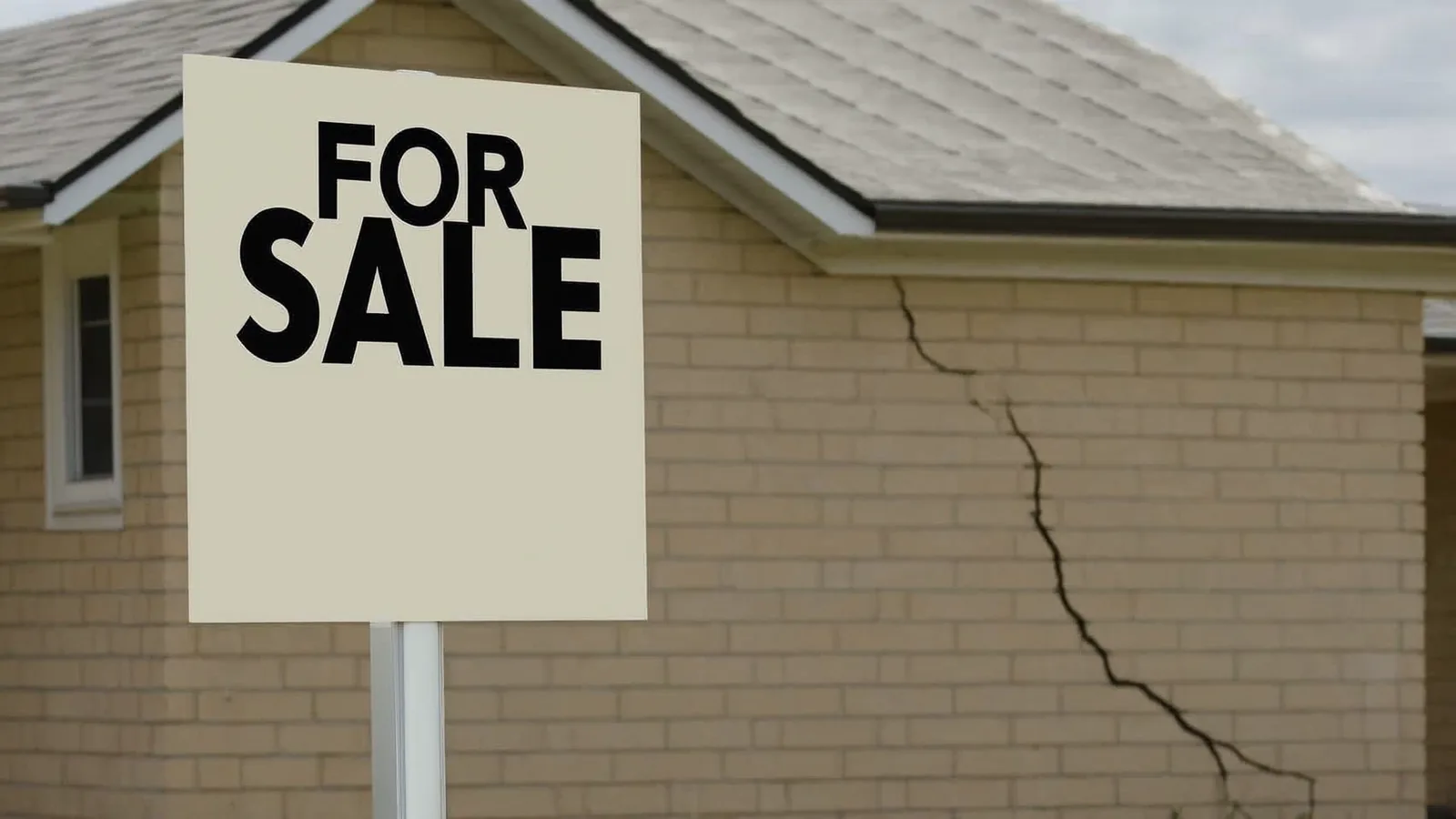
Selling a House with Foundation Issues in Knoxville TN
You can sell a house with foundation issues in Knoxville, TN, but Tennessee law requires you to disclose known material defects to buyers. Your main options are selling as-is at a reduced price, completing repairs before listing, or offering a repair credit. The right path depends on the severity of the damage, your timeline, and current market conditions.
Updated Jan 30, 2025 · 6 min read
Selling a house with foundation issues in Knoxville, TN is possible, but it requires a clear-eyed strategy. Tennessee law obligates you to disclose known structural defects, and local buyers and their inspectors know what to look for in a market with aging housing stock and distinct geological risks. Your three realistic paths are repairing before you list, offering a credit at closing, or pricing the home as-is. The best choice hinges on the type of damage, your equity position, and how quickly you need to close.
What Tennessee Disclosure Law Requires
Tennessee’s Residential Property Condition Disclosure Act requires sellers to complete a state-mandated disclosure form covering known material defects. Foundation cracks, evidence of settlement, water intrusion through foundation walls, and prior repairs all qualify as material defects. You are not required to hire an inspector before selling, but if you know about a problem and omit it, you are exposed to claims of misrepresentation after closing.
The practical implication: if a crack appeared two years ago and you patched it yourself without a professional assessment, that history belongs on the form. Buyers and their attorneys have successfully voided transactions in Tennessee on the basis of incomplete disclosures. Transparency protects you.
Your Three Selling Options
Option 1: Repair Before You List
Completing a professional foundation repair before listing is generally the path that preserves the most sale value. A documented, warranted repair reframes the foundation from a red-flag liability into a resolved maintenance item. When the repair comes with a transferable warranty, buyers can carry that protection forward, which is a concrete selling point.
The math usually works in favor of repair. According to Bob Vila’s foundation repair cost guide, the national average repair runs $5,001, with piering and underpinning ranging from $1,000 to $3,000 per pier. Buyers who see unrepaired foundation damage tend to demand a price reduction that exceeds the actual repair cost, because they are also pricing in perceived ongoing risk and the hassle of managing the work themselves after closing.
Repair also expands your buyer pool. FHA and VA loan programs have property condition standards that can disqualify a home with active structural movement. Completing repairs restores access to the full range of financed buyers, not just cash investors.
To understand the cost range for your specific situation, review the foundation repair cost overview before getting contractor quotes.
Option 2: Offer a Repair Credit
A repair credit at closing lets you sell without doing the work, while giving buyers the funds to address the issue themselves. This approach works when you need speed, when the damage is moderate and well-documented, and when your buyer is willing to manage the repair process.
The risk: buyers and their agents typically request a credit larger than the contractor bid, because they want a buffer for unexpected scope changes. You may also struggle with buyers whose lenders require repairs to be completed prior to closing rather than handled through a credit escrow.
If you go this route, get at least two professional estimates in writing and attach them to your disclosure package. Documented bids anchor the negotiation and reduce back-and-forth.
Option 3: Sell As-Is
Selling as-is means pricing the home to reflect the foundation condition and letting the buyer assume responsibility for repairs. This is the fastest path and the one that requires the least upfront cash from you, but it typically produces the lowest net proceeds.
As-is sales in Knoxville often attract investors or fix-and-flip buyers who build repair costs and a profit margin into their offers. Expect offers 10 to 30 percent below comparable repaired homes depending on damage severity, buyer competition, and current market absorption rates in your submarket (West Knoxville, North Knox, the older neighborhoods closer to the university, etc.).
As-is does not mean disclosure-free. You still complete the Tennessee property condition form accurately.
Knoxville’s Local Foundation Context and Why It Matters for Your Sale
Knoxville’s housing market has characteristics that directly affect how foundation problems are perceived and priced by buyers.
The median construction year for Knoxville homes is 1974, per census data, meaning a large share of the housing stock is 50 or more years old. Knox County’s hilly Valley-and-Ridge terrain favored crawl-space and pier-and-beam construction for decades, so the majority of pre-2000 homes sit on crawl-space foundations. Crawl spaces are prone to pier settlement, wood decay from moisture intrusion, and chronic drainage problems driven by the county’s average of 47.9 inches of annual rainfall (NWS Morristown climate normals, 1991-2020).
The more distinctive local factor is geology. Knox County sits on karst limestone topography, documented by the Tennessee Geological Survey, meaning subsurface voids and solution cavities exist beneath many properties. This creates a sinkhole risk that is the signature foundation hazard of the Knoxville market and one that does not exist in most other Southeastern metros. A buyer’s structural engineer who understands karst geology will approach a Knox County foundation assessment differently than one who only knows expansive-clay markets. Foundations in karst-affected areas often require helical piers driven to competent bedrock rather than shallower underpinning methods, and that distinction affects repair costs and timelines. For a deeper look at what causes these local foundation problems, the foundation problems resource covers the mechanisms in detail.
The wet-dry cycle from 47.9 inches of annual rainfall also drives moderate-to-high shrink-swell behavior in the residual clay and silty clay soils found in valley positions across Knox County. Differential settling is the most common gradual foundation concern, and it tends to be most pronounced on lots where slope and drainage concentrate runoff toward the structure.
Buyers in Knoxville who have done their homework, or whose agents have, will ask pointed questions about soil type, karst exposure, and drainage when foundation issues appear in a disclosure. Having a professional assessment and repair record in hand makes that conversation productive rather than a deal-killer.
What Buyers and Their Inspectors Will Look For
Under ASHI Standards of Practice, home inspectors are required to inspect structural components including the foundation, but they are explicitly not required to provide engineering analysis or an opinion on structural adequacy. They identify visible symptoms: stair-step cracks in brick, horizontal cracks in block walls, unlevel floors, doors that bind. A buyer with real concerns will follow that inspection with a licensed structural engineer.
That structural engineer’s report is what drives the negotiation. If you have already completed a repair with documentation, that report will confirm the work and its warranty. If you have not, the engineer’s report becomes the buyer’s leverage for a price reduction or credit request.
Getting your own structural engineering assessment before listing puts you in a stronger position. You know exactly what you are dealing with, you can price accordingly, and you avoid the surprise of a buyer’s engineer finding something larger than you expected mid-contract.
What This Means for Your Next Step
If you are preparing to list a Knoxville home and foundation issues are on the disclosure form, the first step is a professional inspection to understand the actual scope of the problem. Minor cosmetic cracking and active structural settlement are very different situations that call for very different strategies.
Request a foundation inspection and repair estimate before you set a list price or commit to an as-is sale. Knowing the documented repair cost gives you clear options: fix it and list with confidence, credit it and price accordingly, or price as-is with full information. Any of those paths is manageable. The one path that creates real legal and financial risk is proceeding without disclosure or professional documentation.
For specific repair approaches that may apply to your home, the foundation repair services overview covers the methods used for crawl-space, slab, and karst-affected foundations in the Knoxville area.
Free written inspection
Worried this applies to your home? Get a free inspection.
On-site inspection with elevation survey. Written quote within 24 hours. No obligation.
Questions
Selling a House with Foundation Issues in Knoxville TN FAQs
Do I have to disclose foundation problems when selling my home in Tennessee?
How much does foundation damage reduce a home's sale price?
Is it better to fix the foundation before selling or sell as-is?
Will a home inspector always catch foundation problems?
Can a buyer get a mortgage on a house with foundation issues?
What foundation problems are most common in Knoxville homes?
Does a foundation repair warranty transfer to a new buyer?
Free inspection
Talk to a foundation specialist
On-site inspection with elevation survey. Written diagnosis within 24 hours. No obligation.